Posted June 5, 2018
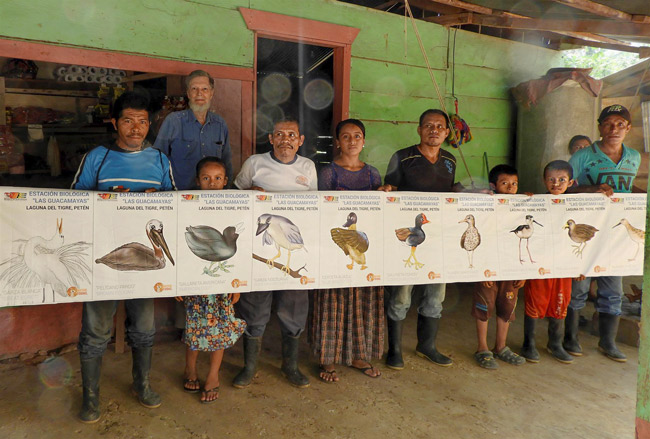
Village leaders of Aldea Cerro Azul, Municipio Chisec, Guatemala, and their families receive our donation of the first of two 5-meter long full-color printout of waterbirds of Guatemala. The school teachers can then cut each bird into a rectangular poster to put on the walls or windows of the school. All the renderings of each bird are by the illustrators of FLAAR Mesoamerica.
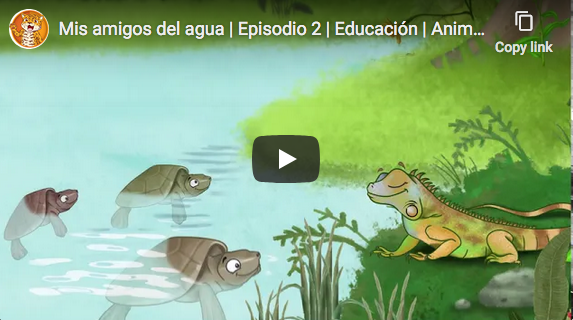
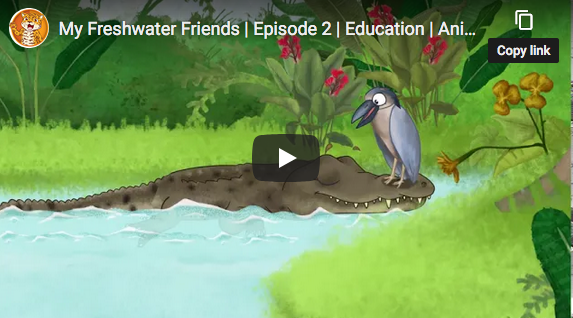
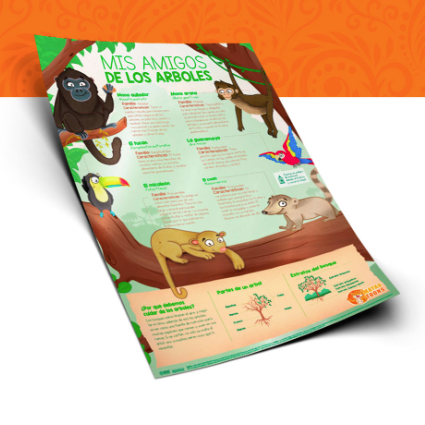
One of our goals is to assist local people to learn about the endangered species, especially birds, mammals and pollinators. So the graphic designers and illustrators of FLAAR Mesoamerica in Guatemala prepare educational drawings of all the species of interest.
We then take these drawings to printer expos and various companies that know FLAAR Reports do the printing for us. We then fly these horizontal banners back to Guatemala and drive several days to reach remote settlements.
This Q’eqchi’ Mayan aldea is best reached by 4WD double-cabin pickup truck. We visited with the village leaders. They asked assistance with respect improve methods for pumping water from a cave, since the village’s previous water source went dry in past months. Before we hiked several kilometers to reach the cave spring, we showed the village leaders and their families the kinds of material we were preparing for local schools. They eagerly expressed interest in having these banners for their schools, so we donated the two banners that we happened to have.
We will return to this area in the future and donate additional educational material. What would most help would be if a foundation, corporation, individual, or embassy program could print the books we have ready for primary schools (www.MayanToons.org). These books are ready in Spanish, English, and Q’eqchi’ Mayan languages. The local teachers have told us they prefer if everything can be in those three languages.
FLAAR (USA) and FLAAR Mesoamerica (Guatemala) are also seeking funds to assist our project on pollinators (more than just bees, butterflies and bats). We would like to prepare banners showing all major pollinators in Guatemala, Mexico, Belize, Honduras, and El Salvador.
Posted July 22, 2016
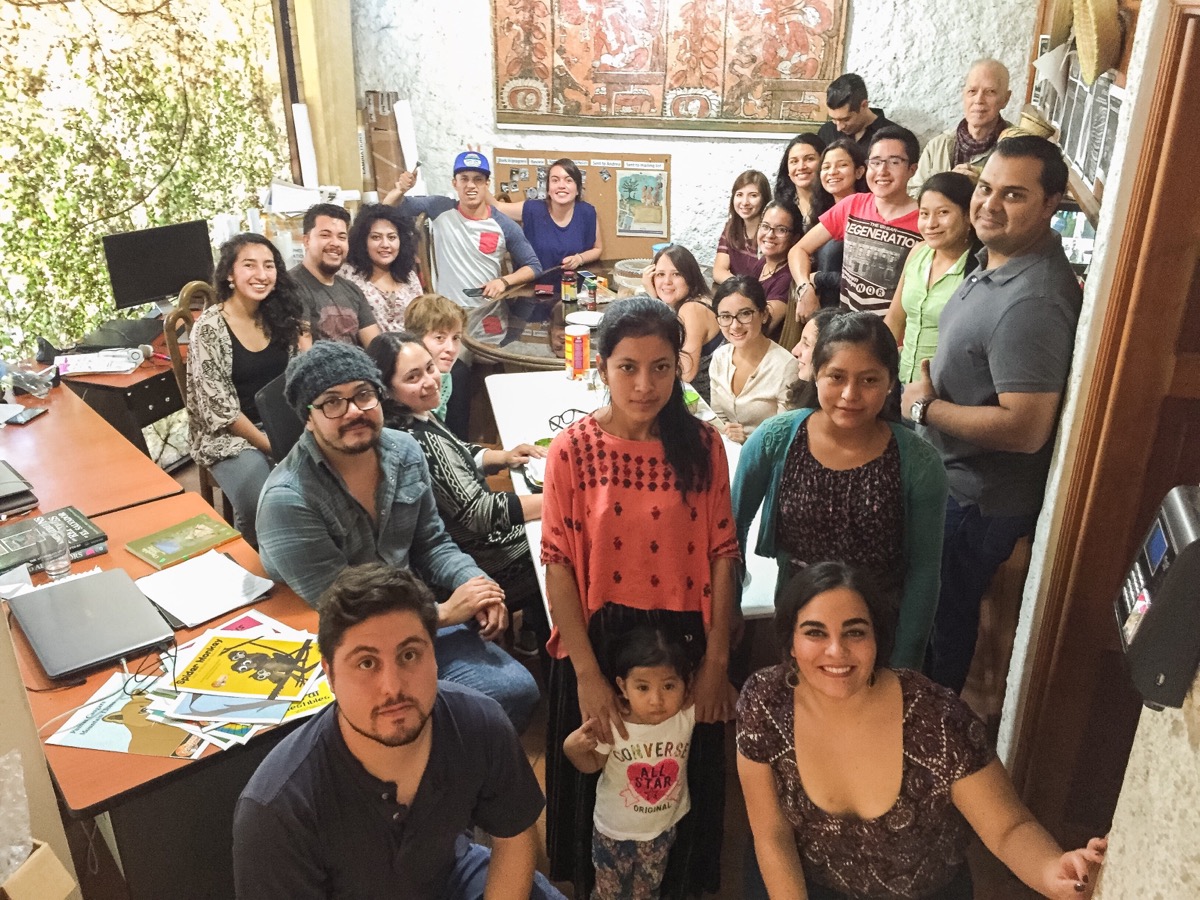
Since we provide all staff flexible working hours, it is rare for 100% of the FLAAR teams to be present at any one time. But today was the birthday celebration for three different employees, so at least 90% of the teams were here at one time.
You can see the Q’eqchi’ and Kakchiquel Mayan student interns and the multitude of university students who work at FLAAR.
We have several teams: digital imaging printing, and flora and fauna. The flora and fauna is in two joint teams: studying plants and animals and doing storyboards and illustrations for educational comic books on endangered species of Guatemala. Our web sites on plants, animals, and how to do high res photography are read by about 600,000+ people.
The digital imaging team does marketing and technology research on UV-curing printers, textile inks, textile printers and textile printing workflow, cutters, laminators, color management, RIP and other software and hardware. The FLAAR web sites on these topics are read by over half a million people around the world (different people than read the plants and animals web sites).
So altogether, our entire coverage of research is read by over a million people.
Posted January 7, 2016
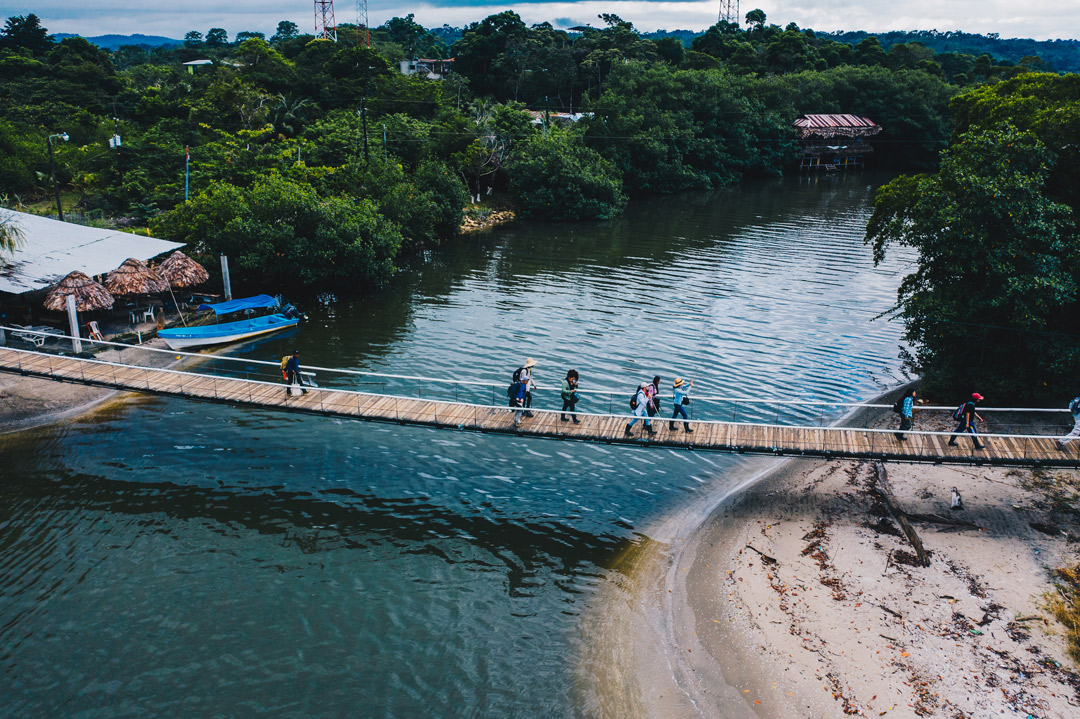
Ten of us, in two 4WD double-cabin pickup trucks, did a field trip deep into the remotest parts of the jungle-covered mountains of Guatemala, Central America, to test methods to render Mayan thatch-roofed houses in 3-dimensional imaging. We used a drone and drone pilot, and university students who are studying digital imaging and biology.
This week, two of us are in Dubai to study wide-format inkjet printing and signage technology. We will be testing which inkjet printers and toner printers can best produce high-resolution photographs of these Mayan houses, plus which printers can best show high-resolution digital photographs of rare Neotropical flowers and jaguars.
Posted October 2015
In the 17th century Spanish colonial former capital of this part of Central America, Dr Hellmuth gave a lecture last Friday on water lily (Nymphaea alba) ethnobotany, iconography, and cosmology, based on his PhD dissertation of the 1980’s.
Now, the coming Friday (Oct 30th), Nicholas will lecture on jaguars, tapirs, crocodiles, herons, sea anemones, turtles, sharks, and stingrays: creatures associated with river, lake, and ocean scenes in Mayan murals, stone sculpture, or decorated funerary vases, plates, and bowls. These lectures are organized by Fundacion La Ruta Maya.
After this lecture Nicholas and two others from the wide-format inkjet printer, inks, and printable substrates division of FLAAR will fly to SGIA in USA and then two will continue to ITMA in Italy.